.svg)



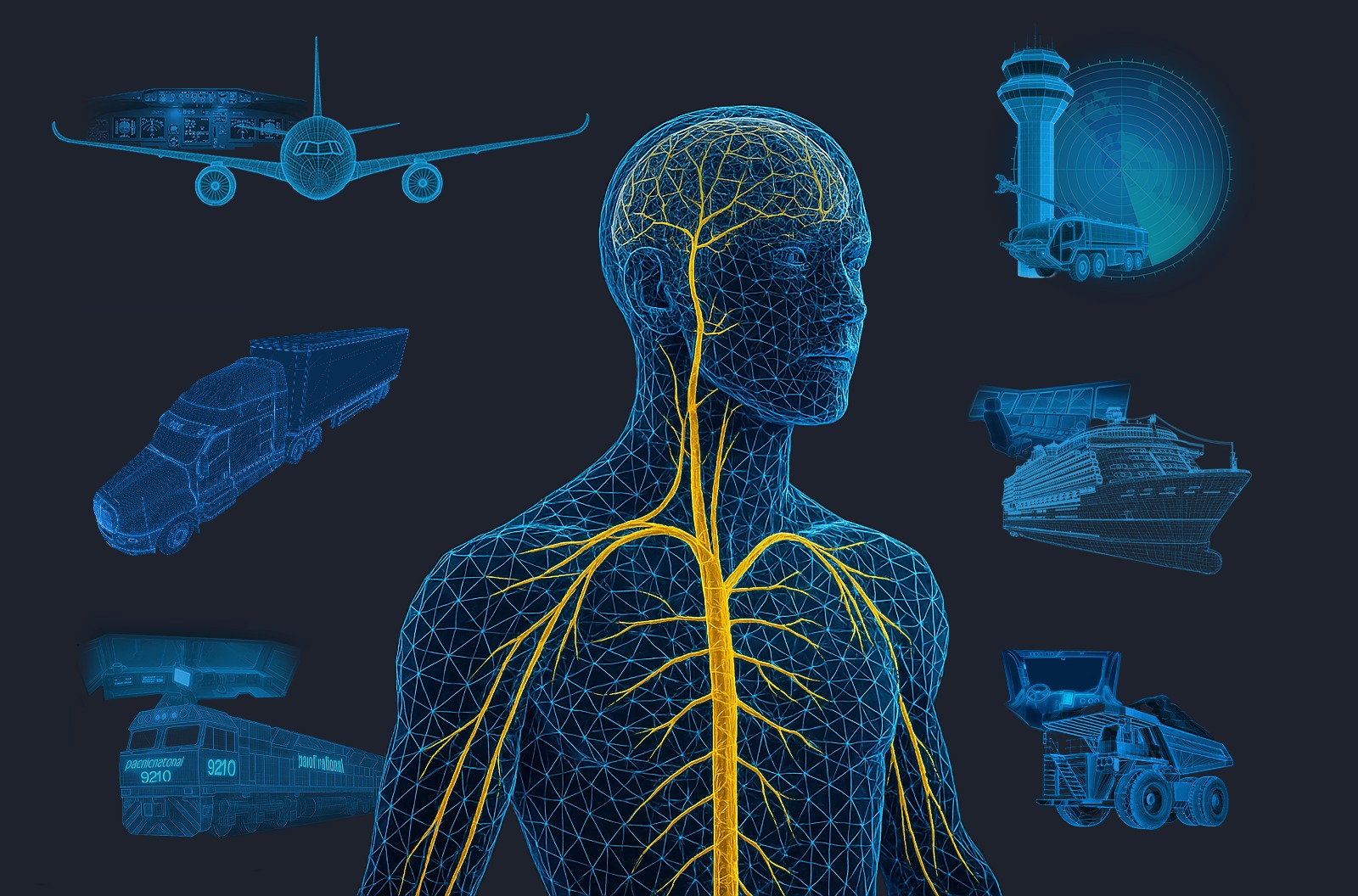
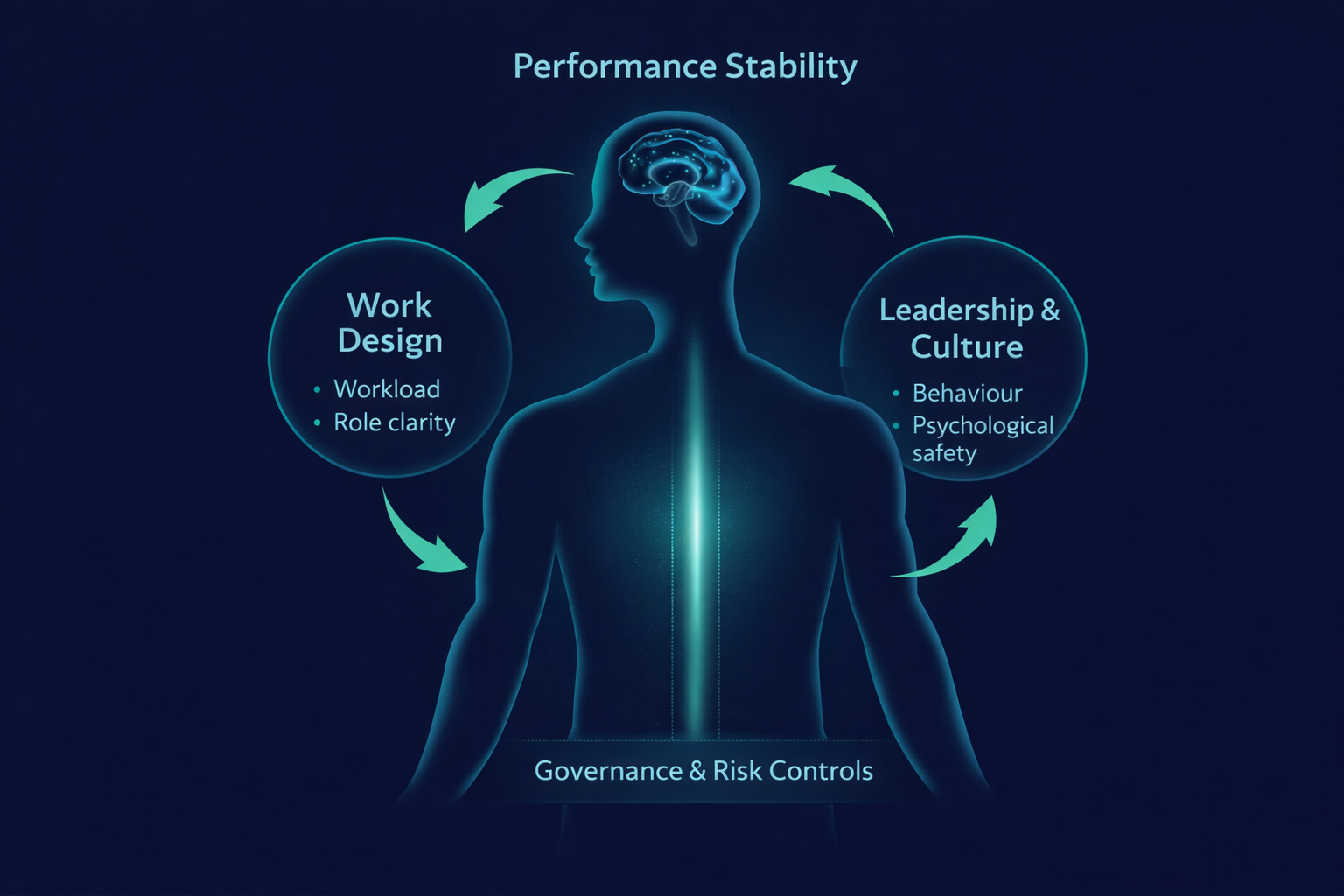
In safety-critical environments, performance is shaped by conditions. Workload, role clarity, leadership behaviour and culture influence how people think, decide and respond under pressure. These are psychosocial risk factors. When these conditions are inconsistent or misaligned, operational risk increases. When they are well governed, human performance stabilises and reliability improves.
Psychological safety reflects the quality of those conditions. When people can raise concerns early, question assumptions and share uncertainty without fear of repercussion, emerging risk becomes visible sooner. In complex operations, that visibility allows small issues to be addressed before they escalate.
At Cor Nexus, we view wellbeing, performance and safety as structurally linked. The design and management of work influences human regulation and decision-making. Human performance shapes safety outcomes. When psychosocial risk is managed with the same discipline as physical risk, wellbeing supports performance, and performance protects safety.
At Cor Nexus, we work with organisations to design systems that strengthen operational reliability and embed psychosocial risk as a core element of operational governance.
Our approach draws on neuroscience and systems thinking, aligned with the Australian Work Health and Safety Code of Practice 2024 and ISO 45003, and informed by contemporary safety thinking. The focus is practical: improving how work is designed, led and supported within complex operating environments.
This includes embedding structured peer support, strengthening leadership capability, and integrating psychosocial risk management into everyday operations. These are not parallel initiatives. They become part of how work is governed and how risk is managed.
The outcome extends beyond regulatory alignment. It shows up in everyday practice: clearer expectations, earlier conversations about emerging issues, and leaders staying curious about the gap between work as imagined and work as done. When psychosocial risk is embedded within operational governance, psychological safety strengthens, and wellbeing becomes part of how performance and safety are sustained.

.svg)
Collaborating with regulators and safety bodies to shape evidence-based standards, ensuring policies are actionable, sustainable, and grounded in systems thinking.
.svg)
Partnering with HR professionals to align with the WHS Psychosocial Code (2024) and ISO 45003 — while building cultures that prioritise the presence of wellness, not just the absence of illness.
.svg)
Equipping managers with tools to integrate wellbeing into training, operations, and critical incident management — strengthening both performance and resilience in high-pressure environments.
Trusted peers who link people, culture, and systems — ensuring wellbeing practices flow through every level of the organisation. They bridge leadership intent with everyday work, making change sustainable.
Tailored solutions for aviation crews, seafarers, rail operators, truck drivers, miners, clinicians, and energy teams — addressing stress, fatigue, and confidentiality while keeping people reliable and operations safe.
Embedding wellbeing into Safety Management Systems across aviation, marine, mining, rail, road, and energy — strengthening performance, trust, and long-term resilience.
Working alongside forward-thinking leaders committed to reshaping their organisations from the inside out — embedding neuroscience, culture, and wellbeing as drivers of innovation and trust.